
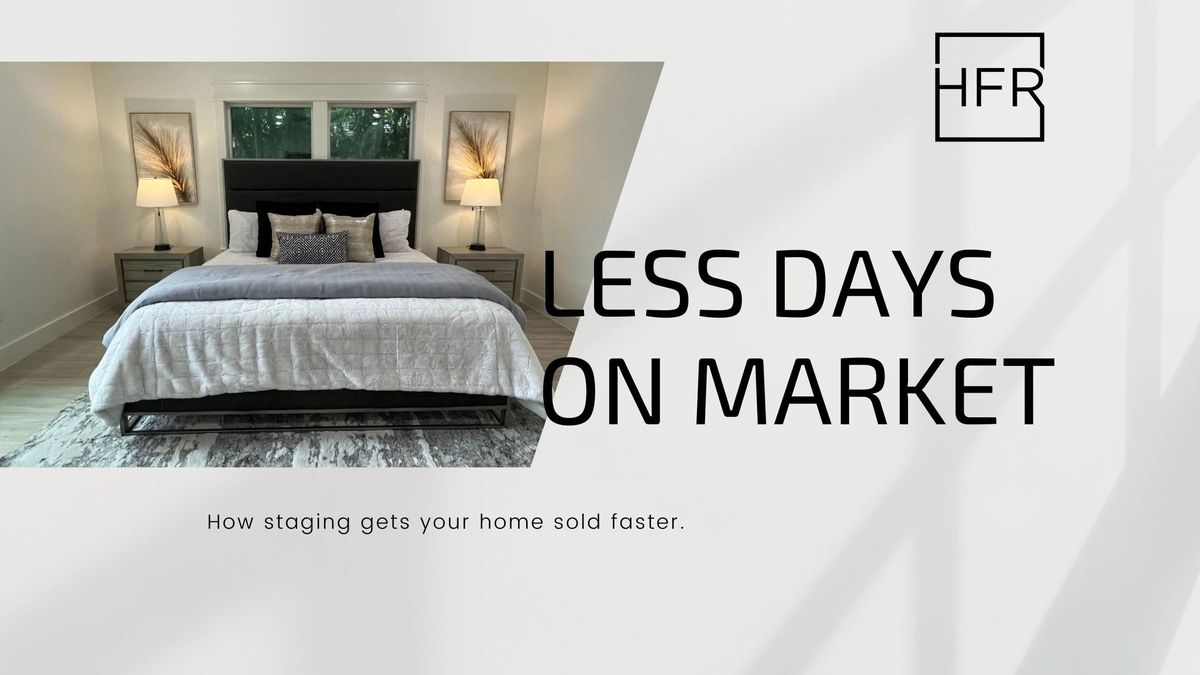
You’re about to put your home on the market. Maybe you’ve already met with your real estate agent, spruced up the landscaping, and taken care of some long-overdue repairs. But have you thought about home staging?
If your answer is no—or “just a little”—you could be overlooking one of the most powerful tools in your selling arsenal. As a home staging expert, I can confidently tell you that staging isn’t just about making a home look pretty. It’s a strategic marketing approach designed to reduce your days on market and help you get top dollar in the shortest amount of time.
In this blog, I’ll walk you through exactly how staging influences how long your home sits on the market, why it works so well, and what you can do to make sure your home stands out to today’s buyers.
First Things First: What Is Home Staging?
Home staging is the art and science of preparing your home for sale by highlighting its best features and creating a neutral, appealing space that speaks to as many potential buyers as possible.
You’re not decorating for yourself anymore. You’re merchandising your home—just like a store would with its products. When staging is done right, your home will feel warm, welcoming, and move-in ready, helping buyers emotionally connect from the moment they step through the door.
Why Should You Care About Days on Market?
“Days on market” (DOM) is one of the most important metrics in real estate. It refers to how many days a home sits listed before going under contract. And here's the thing: the longer your home is on the market, the less attractive it becomes to potential buyers.
A high DOM often triggers red flags:
- “What’s wrong with this place?”
- “Why hasn’t it sold yet?”
- “Maybe the seller is desperate—I’ll offer less.”
In contrast, homes that go under contract quickly tend to command higher offers, have stronger negotiating power, and generate buzz and urgency. Staging can help you achieve just that.
The Link Between Staging and Reduced Days on Market
So, how exactly does staging impact your days on market? Here’s what you need to know:
1. Staging Helps Your Listing Stand Out Online
Let’s be real—you know that buyers start their home search online. In fact, according to the National Association of Realtors (NAR), over 95% of buyers begin their journey by browsing online listings. That means your photos are your first showing. If your home doesn’t grab attention instantly, it’ll get scrolled past.
Staged homes photograph better. With well-placed furniture, coordinated color palettes, and thoughtful design, your home will shine in listing photos. Staging helps define the purpose of each room and makes the home look spacious, clean, and inviting—key traits that buyers notice immediately.
And when more buyers are interested in scheduling showings, you’re far more likely to receive an offer quickly.
2. Staging Highlights the Home’s Best Features
When you stage your home, you’re intentionally drawing attention to the best architectural elements—like that bay window, fireplace, or open-concept kitchen—and downplaying any awkward spaces or flaws.
Without staging, buyers may get distracted by your furniture layout or personal items and miss the real selling points of your home. When buyers see a space that’s clean, balanced, and thoughtfully arranged, they’re more likely to appreciate the true value of the home and less likely to hesitate.
And hesitation is the enemy of a fast sale.
3. Staging Helps Buyers Visualize Themselves Living There
You know how it feels when you walk into a well-designed model home? You instantly start imagining your life there. That’s the goal of staging. By depersonalizing your space and presenting it with mass appeal, you allow buyers to see themselves living in your home.
This emotional connection is key. The faster a buyer envisions their future in your home, the faster they’ll move to make an offer. And that translates directly to fewer days on the market.
4. Staging Minimizes Buyer Objections
Unstaged homes tend to raise more questions and concerns. Buyers may wonder:
- “Will my furniture fit in this room?”
- “Is this space too small?”
- “What would I even do with this weird nook?”
Staging answers those questions before they’re even asked. When you furnish and style a space properly, you give it purpose and proportion, removing doubts and increasing buyer confidence.
The fewer objections a buyer has, the faster they’ll act.
5. Staged Homes Create a Sense of Urgency
A well-staged home creates the impression that it’s well-maintained and move-in ready. This increases perceived value and can spark urgency in the minds of buyers. When buyers feel like a property is desirable and might be scooped up quickly, they’re less likely to delay or lowball an offer.
In competitive markets, staged homes often receive multiple offers—and in slower markets, they still outshine unstaged listings, which tend to linger.
What the Data Says
The proof is in the numbers. According to the Real Estate Staging Association (RESA):
- Homes that were staged before listing sold 87% faster than those that were listed first and then staged later.
- On average, staged homes spend 73% less time on the market compared to their unstaged counterparts.
Additionally, a 2023 NAR report showed that 58% of buyers’ agents said staging had an effect on most buyers’ view of the home, and 31% said staging significantly decreased the time the home spent on the market.
Real-World Example
Let’s say you’re selling a 3-bedroom home in a neighborhood where homes typically sell in about 30 days. Your agent suggests staging, and you decide to go all in: you stage the living room, dining area, kitchen, and primary bedroom.
Within the first week of listing, you have 15 showings and 2 offers. The home goes under contract on Day 8 for 98% of the asking price.
Now imagine the same home, but unstaged. You leave your oversized sectional in the living room, clutter the countertops with appliances, and your guest room is still painted bright pink from when your daughter was 10.
That version of the home might sit for 30, 45, or even 60 days. Buyers will start to question the price. You may need to reduce it. And that delay can cost you more than just time—it can cost you thousands of dollars.
Should You Stage Every Home?
Not every home needs a full staging makeover, but every home benefits from at least a staging consultation. At minimum, you should:
- Declutter and depersonalize
- Deep clean all surfaces
- Neutralize bold colors and patterns
- Define every room’s purpose
- Enhance curb appeal
Vacant homes, luxury listings, or homes in competitive markets often need more extensive staging—including rental furniture and full-scale design plans—but even small changes can have a big impact.
Your Days on Market Matter
If you’re serious about selling your home quickly and for the best possible price, staging isn’t optional—it’s essential.
By staging your home, you’re not just creating a pretty space. You’re crafting a powerful first impression, removing buyer doubts, and triggering that emotional connection that leads to faster offers.
The result? Fewer days on the market, stronger offers, and a smoother path to closing.
So if you’re getting ready to list, don’t skip this crucial step. Whether you hire a professional or tackle it yourself with expert guidance, staging is one of the smartest moves you can make.
Need Help Getting Started?
As professional home stagers, we offer personalized consultations, hands-on staging, and customized plans tailored to your home’s unique features and market conditions. Let’s work together to make your home stand out—and sell faster.
Reach out today to schedule your staging consultation. You only get one chance to make a first impression—make it count.
Contact Us
6550 Long Point Road #204, Houston, TX 77055713-983-0833info@houstonfurniturerentals.com
Monday – Thursday 8:00 am – 4:00 pmFriday 8:00 am – 3:00 pmSaturday & Sunday Closed