
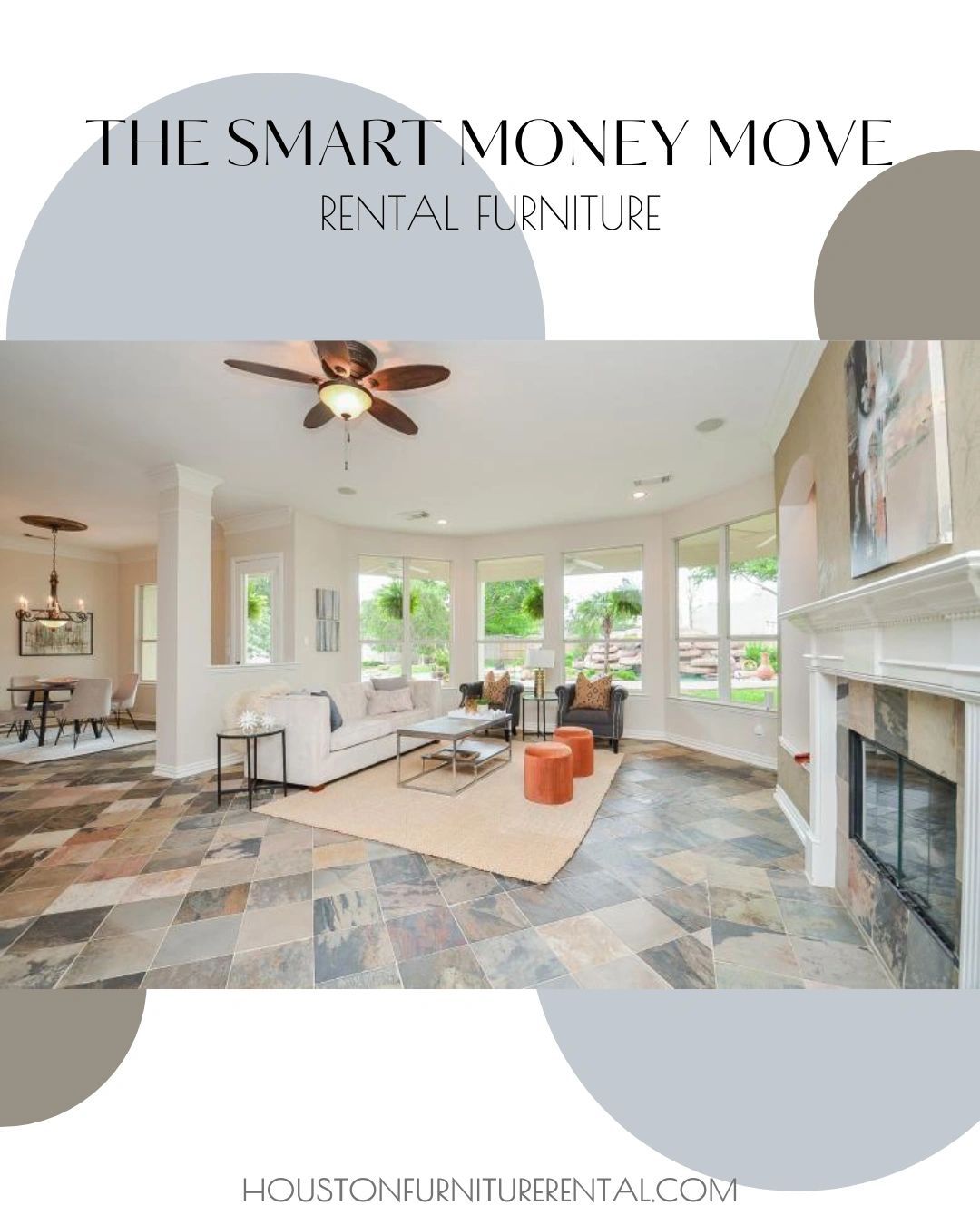
When life throws you into a temporary living situation—whether it's a corporate relocation, a home renovation, a gap between moves, or setting up a short-term rental property—one of the biggest decisions you'll face is how to furnish your space. While buying furniture might seem like the default option, renting can be a surprisingly savvy financial choice that many people overlook.
The Hidden Costs of Buying Furniture
Most people think about furniture purchases in terms of the sticker price alone. But the true cost of ownership extends far beyond what you pay at the checkout counter.
Transportation and Logistics: Getting furniture from the store to your home isn't free. Delivery fees can range from $100 to $500 or more, depending on the size of your order and your location. If you're moving furniture yourself, factor in truck rental costs, gas, and the value of your time (not to mention the risk of damaging your vehicle or the furniture itself).
Assembly Time: That modern desk or bed frame rarely arrives ready to use. The hours spent deciphering instructions, hunting for the right Allen wrench, and assembling pieces represent real costs—especially if you're a busy professional who could be spending that time on revenue-generating activities.
Maintenance and Repairs: Furniture wears down over time. Upholstery can stain, wood can scratch, and mechanisms can break. Repair costs add up, and in many cases, damaged furniture simply gets replaced rather than fixed.
Depreciation: Unlike real estate, furniture depreciates the moment you own it. That $2,000 sofa you purchased loses 20-30% of its value as soon as it enters your home, and continues to depreciate over time. When it's time to move or upgrade, you'll be lucky to recoup half of what you paid.
Moving Costs: If you're relocating, furniture significantly increases your moving expenses. Professional movers charge by weight and volume. A fully furnished home can add thousands to your moving bill—and that's if nothing gets damaged in transit.
The Rental Advantage: Flexibility Meets Affordability
Furniture rental flips the traditional ownership model on its head, offering several compelling financial advantages:
Predictable Monthly Expenses: Instead of large upfront costs that strain your budget, furniture rental spreads costs over time with fixed monthly payments. This preserves your cash flow and makes budgeting easier, especially important during transitional periods when financial uncertainty may be higher.
No Depreciation Worries: When you rent, depreciation is someone else's problem. You simply return the furniture when your rental period ends, with no need to worry about resale value or disposal costs.
Maintenance Included: Quality furniture rental companies typically include maintenance and replacement services. If something breaks through normal use, they'll fix or replace it at no additional cost to you. This peace of mind has real financial value.
Tax Benefits for Businesses: If you're furnishing corporate housing, a home office, or a short-term rental property, furniture rental payments are often fully tax-deductible as a business expense. This can result in significant tax savings compared to depreciating purchased furniture over several years.
Lower Moving Costs: When it's time to relocate, rented furniture stays behind. Your moving costs drop dramatically when you're only transporting personal belongings. For someone relocating from Houston to another city, this alone could save $2,000-$5,000.
Running the Numbers: A Real-World Comparison
Let's look at a typical scenario: You're relocating to Houston for a two-year work assignment and need to furnish a two-bedroom apartment.
Buying Option:
- Furniture purchases: $8,000
- Delivery and assembly: $500
- Moving costs (to next location): $3,000
- Resale value after 2 years: -$3,200
- Total Cost: $8,300
Renting Option:
- Monthly rental for complete package: $480
- Total over 24 months: $11,520
- Delivery/setup included: $0
- Pickup included: $0
- Moving costs for furniture: $0
- Total Cost: $11,520
At first glance, renting appears more expensive. But consider these additional factors:
- The $8,000 furniture purchase represents opportunity cost. Invested conservatively at 5% annual return, that money would grow to $8,820 over two years—a $820 gain.
- Your time has value. Furniture rental typically includes professional delivery and setup. Buying means spending hours shopping, coordinating deliveries, and assembling pieces. Value that time at $50/hour for 20 hours, and that's another $1,000.
- No maintenance or repair costs with rentals, which could save another $200-$500 over two years.
When you account for opportunity cost, time value, and convenience, the actual comparison becomes:
- Buying Total: $8,300 (plus $820 opportunity cost + $1,000 time cost + $300 maintenance) = $10,420
- Renting Total: $11,520
The gap narrows significantly, and for many people, paying a modest premium for the flexibility and convenience of renting makes perfect financial sense.
When Renting Makes the Most Sense
Furniture rental is particularly advantageous in these situations:
Short-Term Stays (Under 3 Years): The shorter your timeframe, the more sense renting makes. For stays under one year, renting is almost always more economical.
Uncertain Future Plans: If you're not sure where you'll be in two years, renting provides flexibility. You're not locked into furniture that might not fit your next space or style preferences.
Corporate Relocations: Companies often cover furnished housing costs for relocated employees. Renting allows you to secure quality furniture without upfront personal expenses.
Home Staging: Real estate agents and homeowners selling properties can achieve stunning results with professionally curated rental furniture, then return it once the home sells—typically within months.
Airbnb and Short-Term Rental Properties: Rental furniture allows property owners to test market demand before committing to permanent furnishings, and to refresh their look periodically to stay competitive.
Between Homes: When you've sold your home but your new one isn't ready, or you're renovating and need temporary accommodations, renting bridges the gap without forcing you to buy furniture twice.
Life Transitions: During divorce, job changes, or other transitional periods, renting provides stability without the commitment of large purchases.
The Environmental Bonus
While financial considerations drive most decisions, there's an environmental argument for furniture rental too. The furniture industry generates massive waste—Americans discard 12 million tons of furniture annually, most of which ends up in landfills.
Rental models promote circular economy principles. Quality furniture gets used by multiple customers over its lifetime rather than being purchased, lightly used, and discarded. Rental companies maintain and refurbish pieces, extending their useful life. When furniture finally reaches end-of-life, professional rental companies are more likely to properly recycle materials than individual consumers.
Making the Right Choice for Your Situation
Furniture rental isn't always the answer. If you're settling into a home you plan to stay in for five or more years, buying makes more sense. If you have specific style preferences or heirloom pieces, ownership is likely preferable.
But for the growing number of people in temporary, transitional, or flexible living situations, renting represents a financially savvy choice that's often overlooked. It converts a lumpy, depreciating capital expense into a predictable operating expense, preserves your financial flexibility, and eliminates hassles around moving, maintenance, and eventual disposal.
In Houston's dynamic market—with its thriving corporate sector, robust real estate market, and growing short-term rental industry—furniture rental has evolved from a last-resort option to a strategic financial choice. Whether you're a professional on a two-year assignment, a real estate agent staging homes, or an entrepreneur launching an Airbnb, running the numbers on renting versus buying might just reveal that the smartest money move is to rent.
The furniture you need doesn't have to be furniture you own. Sometimes, the best investment is the one you don't make.
Contact Us
6550 Long Point Road #204, Houston, TX 77055713-983-0833info@houstonfurniturerentals.com
Monday – Thursday 8:00 am – 4:00 pmFriday 8:00 am – 3:00 pmSaturday & Sunday Closed