
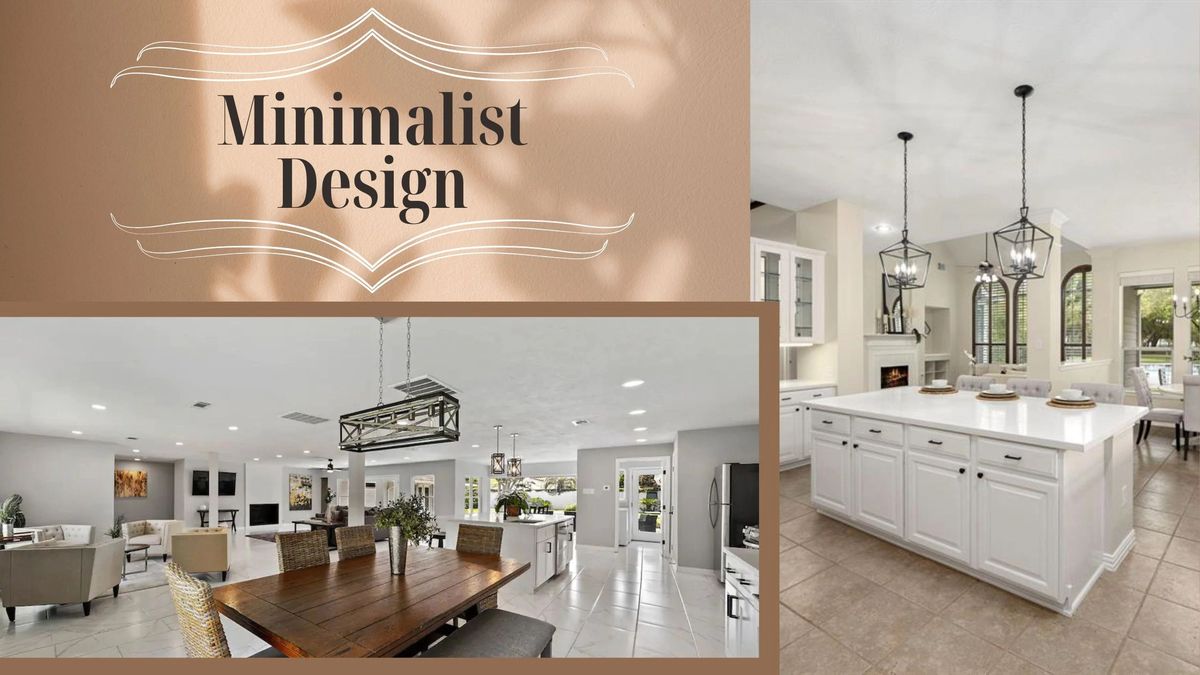
When you’re getting ready to sell, every design choice must pull its weight. Minimalist staging—rooted in “less-is-more” principles—has become one of the fastest, most cost-effective ways to captivate buyers and secure stronger offers. Below, you’ll see how paring back can actually add value, why it works so well with today’s buyer psychology, and the exact steps you can follow to harness minimalist design in your own listings.
1. Minimalism Speaks the Language of Today’s Buyers
Millennial and Gen-Z shoppers now dominate the real-estate market, and both groups overwhelmingly gravitate toward simple, clutter-free interiors. Clean lines and open sightlines tap into their preference for experiences over possessions and their craving for spaces that feel calm in a hectic world. By staging with a restrained hand, you instantly align your home with the tastes of the largest active buyer pools—without alienating older demographics, who also appreciate orderly, well-defined rooms.
Takeaway: Fewer furniture pieces and a neutral palette help every visitor picture their own lifestyle in the space, instead of wrestling with yours.
2. Space Feels Bigger—Without Adding a Single Square Foot
You can’t magically boost square footage, but you can make rooms appear larger and brighter. Minimalist staging removes visual weight: oversized sectionals, busy area rugs, and bulky console tables get swapped for sleek silhouettes and a handful of purposeful accents. Natural light bounces off bare walls and uncluttered floors, making ceilings look higher and footprints feel wider.
Buyers instinctively equate “spacious” with “valuable.” When they sense extra breathing room, they subconsciously upgrade the price they’re willing to pay. In competitive markets, that perception can translate into thousands of additional dollars at closing.
3. Fewer Distractions, More Focus on Architectural Assets
A fireplace surround, a panoramic window, intricate crown molding—these are the character-rich details that sell homes. Unfortunately, loud patterns, crowded bookshelves, and dated art pull eyes away from those features. Minimalism eliminates visual noise so the architectural story shines through.
In practice, that means stripping back to one statement piece per wall, showcasing quality over quantity, and keeping color schemes cohesive (think whites, creams, and muted earth tones). The result? Prospects spend more time admiring the home itself and less time decoding your décor.
4. Scroll-Stopping Listing Photos
Roughly 97% of buyers begin their home search online. You have seconds—sometimes milliseconds—to catch their attention as they swipe through endless thumbnails. Minimalist staging creates crisp, editorial-style photos: tidy kitchen counters, neatly anchored furniture, and clean negative space that frames the room.
Because there’s less visual clutter, images compress better and load faster on mobile devices. That directly boosts click-through rates to your listing page, funneling more qualified traffic to your open house or virtual tour.
5. A Built-In Marketing Narrative: “Move-In Ready”
Buyers fear two things: hidden problems and looming to-do lists. A minimalist environment implies both have been handled. When rooms look magazine-ready, prospects assume the underlying maintenance is equally meticulous. They mentally label the property “turn-key,” which reduces friction and justifies premium pricing.
You’ll also notice negotiations lean in your favor. With nothing obviously “wrong” to haggle over, buyers focus on submitting their strongest offer to secure the house rather than chiseling you down for repainting or junk removal.
6. Cost-Effective—and Often Cheaper Than Traditional Staging
Contrary to the misconception that minimalism feels cold or sparse, you don’t need luxury show-house budgets to achieve warmth. A few smart investments—versatile seating, airy curtains, slender end tables—can stage multiple rooms. Because you’re using fewer items overall, rental fees and moving costs drop dramatically.
Furthermore, you free up your own time. Less décor means shorter install days and quicker photo shoots, allowing you (or your agent) to list sooner and capitalize on ideal market windows.
7. Eco-Friendly and In Step With Sustainability Trends
Younger buyers increasingly prioritize environmental responsibility. By curating rather than accumulating, minimalist staging signals a lower carbon footprint. Using multi-functional pieces (e.g., a bench that doubles as storage) or repurposed wood accents proves you’re mindful of waste.
Highlight these choices in your listing notes: “Sustainably staged using FSC-certified furniture and low-VOC paints.” It’s a subtle but persuasive line that differentiates your home from similarly priced options.
8. Empirical Edge: Faster Sales, Higher Offers
Industry studies repeatedly show staged homes sell 3–30 percent faster and for 1–10 percent more than non-staged properties. Minimalist staging amplifies those advantages because it emphasizes space (buyers’ top priority) rather than style (often subjective). Even in soft markets, streamlined interiors reduce days on market by eliminating the common buyer objection of “too cramped” or “too personalized.”
Imagine shaving just two mortgage payments off your holding costs—or igniting a bidding war that nets an extra $15,000. Minimalist design can deliver exactly those outcomes.
9. Practical Blueprint for Minimalist Staging
Ready to put theory into action? Follow this step-by-step plan:
- Purge ruthlessly. Donate, sell, or store 60–70% of personal belongings. Keep surfaces nearly bare; one decorative object per 4 linear feet of shelving is a solid rule of thumb.
- Dial in a neutral color scheme. Stick to whites, soft grays, or greige for walls and major upholstered pieces. Then layer subtle textures—linen throws, jute rugs—to prevent sterility.
- Select furniture with slender profiles. Swap massive coffee tables for glass-top versions, heavy dressers for floating consoles, and bulky armchairs for armless accent chairs.
- Anchor each room with one focal point. It might be a large abstract canvas in the living room or an organic-shaped mirror above the entry console. Restraint is key.
- Edit window treatments. Use sheer panels or streamlined roller shades that let daylight flood in. Heavy drapes belong in storage.
- Employ balanced negative space. Arrange seating so there’s at least 30 inches of walkway. Resist the urge to fill every corner—breathing room mints perceived value.
- Incorporate biophilic touches. A single fiddle-leaf fig or vase of eucalyptus softens minimalism and adds life without clutter.
- Stage lifestyle vignettes sparingly. Think one tray with two coffee cups on a hotel-style bed or a single cookbook open on a spotless island. Each hint should spark imagination, not overwhelm it.
- Light strategically. Layer ambient recessed fixtures with slim floor lamps. Use warm-white bulbs (2700–3000 Kelvin) to maintain inviting ambiance.
- Audit and refine. Once staged, snap test photos. If your eye snags on an object, remove it. Minimalism thrives on subtraction.
10. Pitfalls to Avoid
- Going too bare. Empty rooms can feel sterile or raise suspicion about acoustics and flaws you might be hiding. Always keep enough pieces to demonstrate function.
- Over-personalized “minimalism.” A giant family portrait in an otherwise spartan hallway defeats the purpose. Stick to abstract or nature-based art.
- Ignoring proportional scale. Furniture must echo the room size; tiny stools in a grand living area look out of place and cheap.
- Poor lighting. Minimalism without proper illumination reads dim and unwelcoming. Brightness sets the tone, so replace burned-out bulbs and open every blind.
Less Truly Is More
Minimalist home staging isn’t about stripping character; it’s about chiseling away the excess so the architectural gem underneath can sparkle. By embracing simplicity, you’ll widen buyer appeal, shorten time on market, and often secure higher offers—all while reducing prep costs and stress.
So, open those closets, grab a donation box, and start editing. Each item you remove earns you free square footage, cleaner listing photos, and a stronger negotiating position. When you finally stand back and look at your airy, radiant rooms, you’ll realize the greatest luxury you can offer buyers is the space to imagine their own future—and that’s exactly what minimalist design delivers.
Contact Us
6550 Long Point Road #204, Houston, TX 77055713-983-0833info@houstonfurniturerentals.com
Monday – Thursday 8:00 am – 4:00 pmFriday 8:00 am – 3:00 pmSaturday & Sunday Closed